
Choosing a retail platform in 2026 requires more than comparing subscription prices. A Retail Pos System must connect checkout, inventory, payments, staff permissions, and customer records without creating daily confusion. Global buyers also need reliable support across time zones, currencies, languages, and tax environments. A polished demo is useful. Real store performance matters more.
This guide examines leading retail POS systems for different business sizes and operating models. It considers hardware flexibility, offline selling, inventory accuracy, reporting depth, integrations, data security, and implementation effort. It also reviews practical details, such as barcode scanning speed, receipt options, refund workflows, and stock updates between stores. These small moments shape staff productivity and customer trust.
No system fits every market.
A vendor may perform well in one region but offer limited local payment support elsewhere. Pricing pages can also hide hardware costs, contract terms, migration work, or premium support fees. Buyers should verify these details directly with vendors and request a realistic trial. Test a busy checkout, a partial refund, a stock transfer, and an internet outage. Those tests reveal more than a sales presentation.
The strongest choices balance dependable technology with transparent service. They provide clear documentation, responsive assistance, and sensible controls for protecting business data. However, rankings should not replace independent evaluation. Store format, product volume, staff skill, and expansion plans can change the result. This overview offers a practical starting point, while acknowledging that some recommendations may need adjustment after hands-on testing.
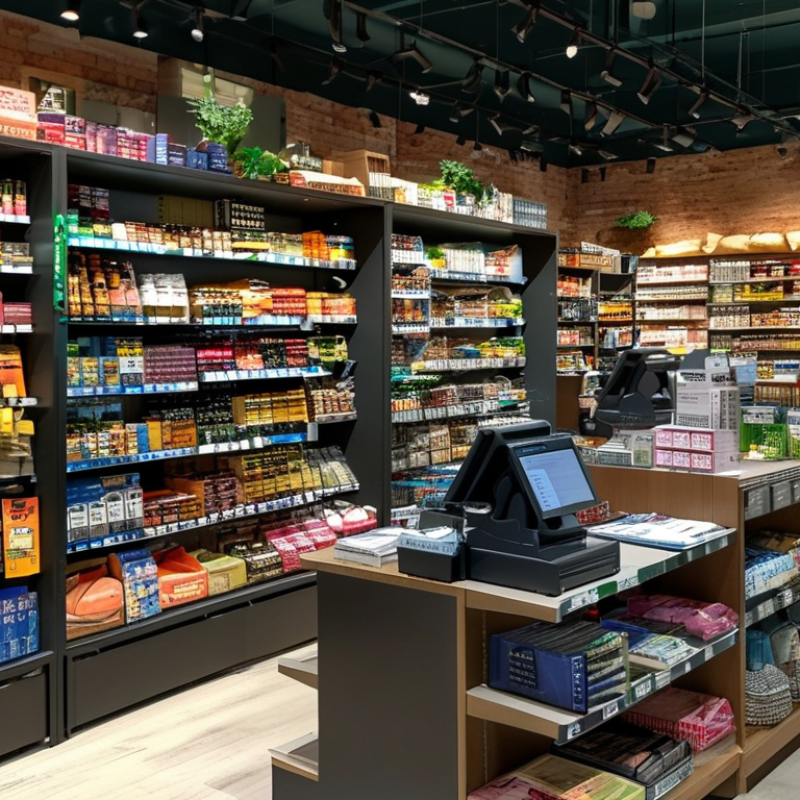
A retail POS system is the operational hub at a store counter. It records sales, accepts payments, updates inventory, and produces receipts. In practical use, it also connects checkout activity with purchasing, staff access, and customer service.
Receipts matter.
A capable system should support multiple currencies, languages, payment methods, tax settings, and product catalogs. It must also protect transaction data through controlled permissions, secure updates, and dependable backups. Global buyers should check local integration requirements before selecting a platform. A feature listed online may not work equally well in every market.
The role of POS technology extends beyond faster checkout. It can reveal which products sell during a weekend rush, where stock disappears, and when queues become uncomfortable. Managers can use these signals to adjust replenishment and staffing. However, clean reports depend on accurate product setup and consistent staff training. That weakness is often underestimated.
The global market includes small shops, department stores, pop-up counters, and multichannel retailers. Their needs differ sharply. A compact store may value simple installation, while a regional chain may require centralized control across currencies and locations. Offline capability can also matter when connectivity fails. A short pilot, using real transactions and busy periods, can expose hidden costs before expansion. No system is perfect. The right choice depends on workflow, market conditions, support quality, and measurable store needs.
Modern international retail requires more than a fast checkout screen. A capable POS system should process multiple currencies, languages, payment methods, and local tax settings. These functions reduce confusion when customers shop across borders. Staff should also switch languages easily during busy store hours.
Reliable offline operation matters. Internet service can fail during a crowded Saturday afternoon. The POS should continue recording sales and sync them securely after reconnection. Inventory updates must move across stores, warehouses, and online channels with minimal delay. One misplaced stock figure can create a costly customer complaint.
Strong access controls protect sensitive business data. Managers need clear permissions, while auditors need searchable transaction histories. Real-time dashboards should show sales, returns, product movement, and staff performance in readable formats. Useful integrations with accounting, ecommerce, loyalty, and shipping tools can reduce repeated manual entry. However, integration quality varies. A smooth demonstration does not always reflect daily use.
Retail teams should test the system with real scenarios before deployment. Try a partial refund, a currency change, a network outage, and a late inventory delivery. Measure response time and staff learning effort. Support should provide regional assistance, documented procedures, and transparent service terms. No platform is perfect. A small training gap can still disrupt a well-designed operation. Regular reviews help retailers adjust workflows as stores, regulations, and customer expectations change.
| Capability Area | Required Feature or Standard | Minimum Operational Expectation | Why It Matters for International Retail | Suggested Validation Metric | Priority |
|---|---|---|---|---|---|
| Multi-Currency | Support for ISO 4217 currency codes and local-currency pricing | Display, transact, refund, and report in multiple currencies without manual spreadsheet conversion | Reduces pricing errors and supports local customer payment preferences across markets | Number of supported selling and settlement currencies; currency-conversion audit accuracy | Essential |
| Tax Compliance | Configurable VAT, GST, sales tax, exemptions, and tax-inclusive pricing | Apply location-based tax rules and retain tax details on receipts and invoices | Tax treatment differs by jurisdiction, product category, customer type, and transaction location | Tax calculation accuracy by market; availability of tax reporting exports | Essential |
| Payment Acceptance | Support for EMV chip, contactless, mobile wallets, online payments, and local payment methods | Accept major card schemes, NFC wallets, QR-based methods, and regionally relevant payment types | Payment preferences vary significantly by country and customer segment | Payment-method coverage by country; authorization and decline rates | Essential |
| Payment Security | PCI DSS v4.0.1-aligned controls, tokenization, encryption, and role-based access | Minimize stored card data and protect payment information in transit and at rest | Strong payment security reduces breach exposure and supports compliance obligations | PCI assessment status; encryption coverage; privileged-access review results | Essential |
| Offline Trading | Offline transaction mode with secure synchronization | Continue essential checkout operations during temporary internet outages and reconcile automatically after reconnection | Connectivity interruptions can otherwise stop sales, especially in stores with unstable networks | Offline transaction duration supported; synchronization success rate; conflict rate | Essential |
| Omnichannel Commerce | Unified store, website, marketplace, click-and-collect, and ship-from-store workflows | Use a shared product, price, inventory, customer, and order record across sales channels | Customers expect consistent availability, pricing, fulfillment, and returns across channels | Inventory synchronization latency; order-routing accuracy; cross-channel return completion time | Essential |
| Inventory Management | Real-time stock visibility with multi-location transfers and cycle counting | Track sellable, reserved, damaged, in-transit, and available-to-promise quantities | Accurate inventory helps prevent overselling and improves replenishment decisions across regions | Inventory accuracy rate; stockout rate; transfer processing time | Essential |
| Product Localization | Multi-language product data, receipts, tax labels, and customer communications | Allow market-specific names, descriptions, units of measure, and receipt formats | Localized content improves customer understanding and supports local legal requirements | Supported languages and locales; receipt localization coverage | Recommended |
| Returns and Refunds | Cross-channel returns, partial refunds, exchanges, and original-payment refunds | Process returns using order history, receipt lookup, barcode scanning, or approved exception rules | Consistent returns improve customer trust while limiting fraud and reconciliation problems | Average return-processing time; refund reconciliation accuracy; exception rate | Essential |
| Customer Data | Consent management, customer profiles, loyalty support, and privacy controls | Capture only necessary personal data and support access, correction, deletion, and marketing preferences | International retailers must manage differing privacy and marketing requirements | Consent capture rate; data-subject request completion time; duplicate-profile rate | Essential |
| Fraud Controls | Configurable refund permissions, manager approvals, void controls, and audit trails | Record who performed, approved, changed, or canceled each sensitive transaction | Centralized controls help reduce internal loss, refund abuse, and unauthorized discounts | Unapproved discount and refund rate; audit-log completeness; exception volume | Essential |
| Reporting and Analytics | Real-time dashboards with store, region, channel, currency, tax, and product analysis | Export standardized reports and compare performance using consistent definitions | Global decisions require comparable data despite different markets and currencies | Report refresh time; data-completeness rate; number of configurable dimensions | Essential |
| Integration | Documented APIs, webhooks, import/export tools, and standardized data formats | Connect with accounting, ERP, CRM, e-commerce, tax, payments, logistics, and workforce systems | Open integration reduces duplicate entry and supports country-specific technology stacks | API availability; webhook delivery success rate; integration error rate | Essential |
| Scalability | Centralized administration for multiple stores, legal entities, regions, and currencies | Add locations and users without redesigning the operating model or duplicating product data | International expansion requires controlled growth without excessive administrative overhead | New-store deployment time; supported locations per account; user-administration effort | Recommended |
| Reliability | Documented uptime target, backup procedures, disaster recovery, and incident communication | Provide resilient service operations and clearly defined recovery objectives | Checkout availability directly affects revenue and customer experience | Monthly uptime; recovery time objective; recovery point objective; incident response time | Essential |
| Hardware Flexibility | Compatibility with receipt printers, barcode scanners, cash drawers, customer displays, and payment terminals | Support approved hardware configurations for fixed tills, mobile checkout, and self-service use cases | Hardware requirements differ by store format, country, and payment environment | Supported operating systems and devices; replacement setup time; device failure rate | Recommended |
| Accessibility | Accessible interface design and support for keyboard, screen, and display usability | Provide readable controls, clear status messages, and an operating workflow suitable for diverse employees and customers | Accessible systems support inclusive service and reduce training barriers | Accessibility review results; task-completion rate; training time by user group | Recommended |
| Sustainability Data | Reporting for paper receipts, device lifecycle, energy use, and product-related environmental data where available | Provide configurable sustainability metrics without compromising transaction or compliance reporting | Retailers increasingly need measurable environmental information for internal targets and disclosures | Digital-receipt adoption; paper reduction; device replacement cycle; reporting completeness | Advanced |
Choosing a retail POS system in 2026 requires more than comparing monthly prices. Start with business size. A small shop may need fast checkout, inventory alerts, and simple staff permissions. A growing retailer needs purchasing workflows, returns control, and store-level reporting. Large operators should test APIs, centralized pricing, audit trails, and offline selling before signing a contract. Scale changes the risk.
Regional payment behavior matters just as much. The 2024 Worldpay Global Payments Report found that digital wallets represented about 30% of global point-of-sale transaction value in 2023. That share is projected to approach 39% by 2027. A system built for card-heavy markets may struggle with wallets, bank transfers, local tax receipts, or unstable connectivity. Ask vendors to demonstrate a real transaction using your target currencies and payment methods. Test it during a network outage.
Security and reliability deserve practical verification. PCI SSC guidance supports strong access controls, payment-data protection, and regular monitoring, but compliance claims alone prove little. Request independent security reports, recovery-time targets, and documented support procedures. The 2024 Verizon Data Breach Investigations Report linked many breaches to human error and stolen credentials, so staff controls matter. Keep permissions narrow. Keep training short.
I would not choose a system solely from a polished demo. Demos rarely show refunds, split payments, stock corrections, or regional reporting. Run a limited pilot with real products and several employee roles. Some requirements will be missed. That is useful evidence, not failure.
Comparing leading retail POS platforms in 2026 requires more than checking monthly prices. Global buyers should examine checkout speed, inventory accuracy, payment coverage, and regional tax support. A reliable platform should handle multiple currencies, languages, stores, and sales channels without creating duplicate records. Offline checkout is essential when internet service fails during a busy afternoon.
Test it live.
The strongest systems connect point-of-sale data with purchasing, warehouse operations, customer records, and financial reporting. Open APIs can support local payment services and existing business software. However, integration quality differs widely. Ask for documented interfaces, realistic implementation timelines, and evidence from retailers with similar store sizes.
Security deserves equal attention, including role-based access, encrypted data, audit logs, and clear data-retention policies.
A polished demonstration can hide daily friction.
Staff may need several screens to process a return, correct a price, or split a payment. That gap matters. Buyers should run practical trials with real product categories, barcode scanners, receipt printers, and unstable network conditions. Independent reviews and customer references add credibility, but they are not perfect evidence.
A platform that suits a large chain may overwhelm a growing retailer. Conversely, a simple system may lack advanced forecasting or centralized control. Compare total ownership costs, training demands, support hours, and upgrade policies before choosing.
2026 Top Retail POS Systems for Global Buyers
Implementation, Security, Compliance, and International Support Factors
Choosing a retail POS system for global operations requires more than comparing screens and subscription fees. Store teams need clear workflows, dependable hardware, and training that fits local working habits. Test it in practice. A useful trial should cover refunds, split payments, offline sales, inventory transfers, and end-of-day reconciliation.
Security deserves equal attention. Ask how payment data is encrypted, where customer information is stored, and how access permissions are managed. Multi-factor authentication, audit logs, secure updates, and rapid incident communication should be standard expectations. A system may appear secure during a sales demonstration, yet weak user controls can create serious exposure.
Compliance is not a single checkbox. Requirements can vary by country, payment method, tax structure, privacy rule, and electronic invoicing process. Buyers should request current documentation and confirm which responsibilities remain with the retailer. International support also matters. Response hours, language coverage, local integrations, and replacement hardware procedures can affect store continuity. That gap matters. A provider may promise worldwide service, but practical support can still be uneven outside major markets. Plan a phased rollout, record failed tests, and review results with store staff before expanding. Even experienced teams miss regional details.
This buyer-weighting model allocates 100 evaluation points across the factors most relevant to international retail POS selection. Security emphasizes PCI DSS v4.0.1 controls, while compliance includes privacy, tax, invoicing, and data-residency requirements such as GDPR and applicable local regulations. The scores represent evaluation priorities, not vendor or company performance data.
Thank you for reaching out.
Your message has been received, and a member of the Bluestem Energy Solutions team will be in touch soon. We appreciate your interest and look forward to connecting.
