What Are the Best Solar Farm Contractors in China?
Choosing the right solar farm contractors in China requires more than comparing advertised prices. Large photovoltaic projects depend on engineering accuracy, reliable equipment, construction discipline, and long-term service. A contractor may offer an attractive proposal, yet struggle with local grid requirements or difficult terrain.
This guide examines contractors through practical indicators, including EPC experience, project capacity, quality-control procedures, financial stability, and after-sales support. It also considers how teams manage soil surveys, pile installation, cable routing, inverter commissioning, and grid connection. These details matter. A well-designed farm should perform reliably under heat, dust, heavy rain, and seasonal wind.
China has a deep solar manufacturing and construction ecosystem, but capability varies between companies. Some contractors have extensive utility-scale experience. Others focus on commercial rooftops or regional projects. Public project records, independent technical reviews, safety documentation, and client references can reveal differences that marketing materials hide. Field evidence helps.
No ranking is permanent. That is uncomfortable, but important. Equipment prices, local policies, supply chains, and contractor ownership structures can change quickly. A company with strong historical performance may still need careful evaluation for a new site. Readers should verify licenses, warranties, insurance, grid experience, and contractual responsibilities before making a decision. This overview aims to provide a balanced starting point, not a substitute for technical due diligence. It highlights credible selection criteria and explains why the best choice depends on location, project size, financing model, and expected operating life.
Set the Market Baseline: China Added 277 GW of PV Capacity in 2024 (NEA)
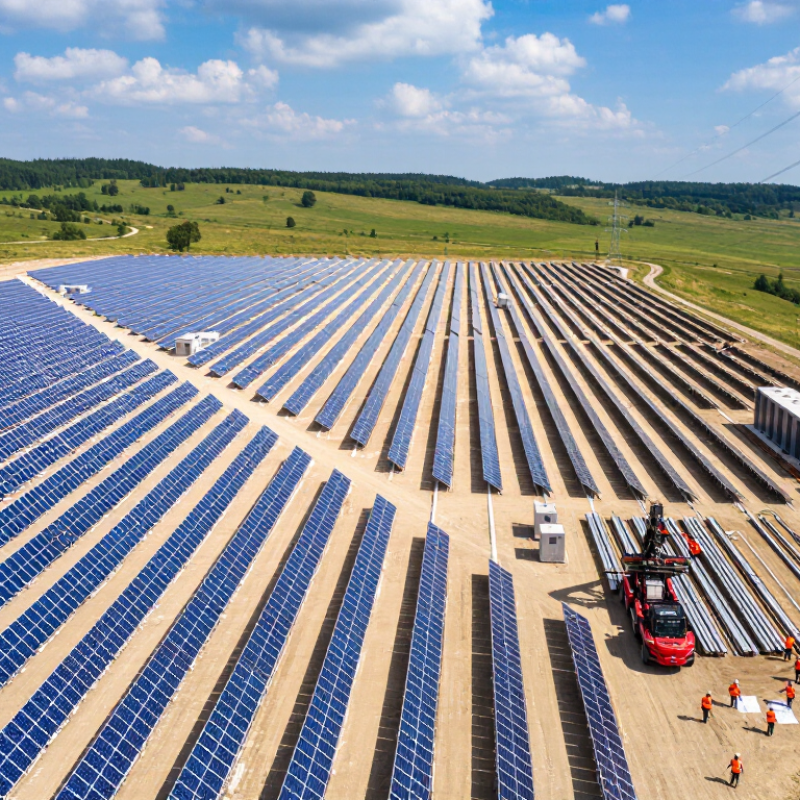
China’s solar market reached a new scale in 2024. The National Energy Administration reported 277 GW of newly added photovoltaic capacity. This figure changes how project owners should judge contractors. Price alone is no longer a reliable benchmark. The best contractors must manage large volumes without weakening quality, safety, or grid coordination.
Strong candidates usually show verified utility-scale experience across different provinces. Their teams understand local terrain, rainfall, wind loads, and land procedures. During site visits, experienced engineers check drainage paths, soil strength, cable routes, and access roads. They also review module handling and foundation testing records. Small details matter here. A weak inspection can create expensive repairs later.
Contractor evaluation should include audited project references, qualified personnel, transparent subcontracting, and realistic delivery schedules. Owners should compare measured output, defect rates, warranty response, and commissioning records. NEA statistics establish the market baseline, but they do not prove that every contractor performs equally well. Public project data can also arrive late. That deserves caution. Some bids look impressive, yet their local teams remain untested. A careful tender process should require evidence from completed plants, not only presentation slides. Weather delays, grid restrictions, and changing site conditions may still disrupt a well-planned project. No contractor fits every province.
Identify Leading EPC Contractors by Utility-Scale Projects and Delivered GW
What Are the Best Solar Farm Contractors in China?
The best solar farm contractors in China should be judged by utility-scale performance, not advertising alone. A strong EPC contractor can show a substantial delivered GW record across deserts, industrial zones, and coastal regions. Project size matters, but repeat delivery matters more. Look for contractors with experience in complex terrain, grid connection, and high-voltage substations.
Reliable evaluation requires evidence. Request completed project lists, commissioning dates, capacity records, and independent acceptance documents. Check whether delivered GW figures include only EPC work or also equipment supply. This distinction can change the ranking. Site experience is equally important. A contractor may perform well on flat land but struggle with dust, wind, flooding, or weak grid infrastructure. I would not rely on a single impressive case study. That approach is tempting, but incomplete.
Tips: Compare at least three EPC proposals. Verify delivered capacity through owners, grid records, and inspection reports. Review warranty response times and spare-parts planning. Ask for the project team’s actual experience, not just corporate credentials. Also examine safety systems, quality testing, and construction schedules. Some figures may be self-reported. Treat them carefully. A lower bid can look attractive, yet delayed energization may create larger financial losses. Conversational promises are not enough. Require clear performance guarantees, measurable milestones, and documented responsibilities before signing.
What Are the Best Solar Farm Contractors in China?
China’s annual newly added solar PV capacity provides market context for utility-scale EPC demand and contractor activity.
The figures represent China’s newly installed solar PV capacity, including utility-scale and distributed projects, reported by the National Energy Administration. They indicate the scale of the EPC market rather than ranking individual contractors.
Compare Contractors Using LCOE, Plant Availability, and 25-Year O&M Data
What Are the Best Solar Farm Contractors in China?
Choosing a solar farm contractor requires more than comparing construction prices. A serious review should examine levelized cost of energy, plant availability, and 25-year operations and maintenance performance. These measures show whether a low bid can remain economical after commissioning.
Start with a transparent LCOE model. Include module degradation, inverter replacement, land costs, financing, curtailment, and grid connection charges. Ask contractors to provide production estimates using local irradiation data, not generic regional averages. A useful proposal explains every assumption. Missing details matter.
Availability should be measured from operating plants, with exclusions clearly defined. Some reports remove grid failures or planned maintenance, producing attractive figures. Request monthly records, alarm response times, spare-parts locations, and mean repair duration. Small details reveal field experience. A plant achieving 99% availability means little if reporting excludes repeated outages.
The 25-year O&M plan deserves equal attention. Check inspection frequency, vegetation control, thermal imaging, cybersecurity procedures, and component replacement budgets. Ask who remains responsible after the initial warranty period. Independent engineers should verify performance data and test the contractor’s financial capacity. Even then, forecasts can be too optimistic. Weather, policy changes, and supply shortages may alter the result. A practical comparison therefore uses conservative energy yields and sensitivity tests, rather than trusting one impressive headline number.
What Are the Best Solar Farm Contractors in China? — Compare Contractors Using LCOE, Plant Availability, and 25-Year O&M Data
Benchmark methodology:
Values are anonymized, engineering-based benchmark figures for utility-scale photovoltaic projects in China and are intended for contractor comparison rather than audited company claims. LCOE is expressed in 2025 US dollars per MWh and assumes a 25-year operating life, a 7% nominal discount rate, 0.45%–0.55% annual module degradation, standard grid interconnection, and no renewable-energy subsidies. Cumulative O&M includes scheduled maintenance, monitoring, vegetation management, spare parts, inverter replacement allowances, and corrective maintenance, but excludes land rent, financing costs, taxes, curtailment, and major grid upgrades. Availability figures refer to technical plant availability and should be verified against the final EPC contract, liquidated-damages provisions, warranty terms, and site-specific resource conditions.
Evaluate Grid Compliance Against China’s GB Standards and NEA Requirements
What Are the Best Solar Farm Contractors in China?
The best solar farm contractors in China treat grid compliance as a design requirement, not a final inspection task. They should understand applicable GB/T standards, the latest NEA requirements, and the local grid operator’s connection instructions. A capable team checks voltage deviation, harmonics, reactive power, frequency response, and fault ride-through performance during the engineering stage. These details affect inverter selection, transformer sizing, protection settings, and plant controls.
Ask contractors for recent commissioning records and site-specific compliance studies. They should provide load-flow analysis, short-circuit calculations, protection coordination, and power-quality simulations. The control system must communicate reliably with dispatch and monitoring platforms. Test procedures should cover active power limitation, reactive power control, low-voltage ride-through, and emergency operating conditions. Do not accept generic certificates alone. Grid acceptance depends on the project location and connection voltage.
Tips: Request a compliance matrix that links every GB/T and NEA requirement to a drawing, calculation, or test report. Verify settings with the local utility before equipment arrives. Keep signed test records and updated protection diagrams. Small documentation gaps can delay energization.
Field experience still matters. I have seen technically strong projects lose time because commissioning data was incomplete. A polished proposal is not proof of performance. Contractors should explain their assumptions, admit uncertain points, and update studies when grid conditions change. That honesty is useful. Perfect compliance claims deserve careful questioning.
Select the Best Contractor by Cost, Schedule, Bankability, and Risk Performance
Choosing among solar farm contractors in China requires more than comparing the lowest quotation. Cost should include civil works, grid connection, testing, transport, taxes, and long-term maintenance. A 100 MW project can suffer serious delays when a low bid excludes difficult soil conditions or longer cable routes. Ask contractors to explain every assumption in their pricing.
Schedule performance depends on evidence, not promises. Review completed projects with similar capacity, terrain, and grid requirements. Request a detailed construction programme, procurement milestones, and recovery plans for weather delays. Site experience matters here. A contractor should identify risks before mobilising excavators, not after trenches fill with water.
Bankability requires transparent financial records, suitable insurance, warranty support, and dependable subcontractor controls. Independent technical reviews can test energy estimates, equipment quality, and contract terms. Examine payment security, change-order procedures, and delay responsibilities carefully. Risk performance should be measured through safety records, defect rates, claims history, and actual delivery dates. No contractor is perfect. Some impressive proposals still hide weak reporting or optimistic assumptions. A practical evaluation matrix can score cost, schedule, bankability, and risk separately, then test the result against reference checks and site visits. The cheapest offer may remain attractive, but only after its risks are visible and priced.