
China has become a major force in the global Mining Truck market. Its manufacturers now serve open-pit mines, quarries, and infrastructure projects across multiple regions. Buyers are no longer comparing payload alone. They examine fuel consumption, drivetrain durability, braking performance, service networks, and parts availability.
The International Energy Agency’s Global Critical Minerals Outlook 2024 highlights continuing pressure to expand mineral supply. PwC’s Mine 2024 report also identifies productivity, decarbonization, and digital technology as major mining priorities. These pressures directly affect truck purchasing decisions. A 240-ton Mining Truck may look impressive on paper. However, poor road conditions, long haul distances, or limited maintenance support can quickly reduce its value.
Jim Umpleby, Caterpillar’s chairman and chief executive, said, “We are helping our customers build a better, more sustainable world.” That idea is increasingly relevant to heavy haulage. A modern truck must move more material while reducing idle time, emissions, and operating risk. Still, sustainability claims require evidence. Buyers should request fuel records, availability data, warranty terms, and local service references.
This guide examines China’s top ten Mining Truck manufacturers for global buyers. It considers product range, payload capability, technology, export experience, and after-sales support. Rankings can change. Market reputation is not permanent. Some manufacturers offer strong prices but limited overseas support, while others provide better documentation at higher costs. The most suitable choice depends on the mine, not the brochure. That is where many purchasing decisions become difficult.
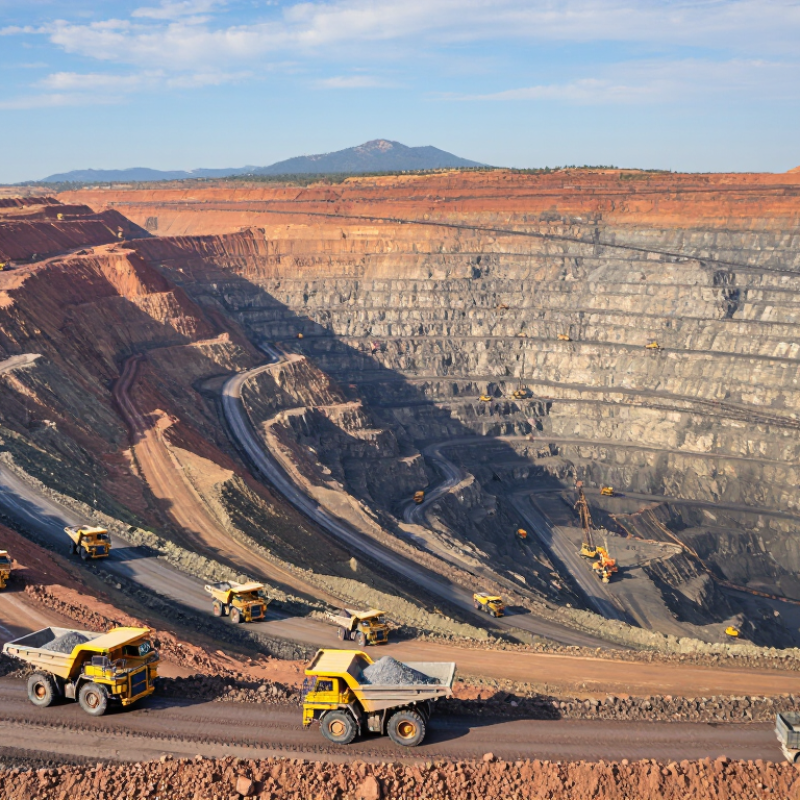
For buyers comparing leading mining truck manufacturers, the real question is not brochure size.
It is usable production. Large open-pit mines depend on haul trucks to move blasted material from loading areas to crushers, stockpiles, or waste dumps. High payloads reduce trips, but only when roads, ramps, and loading tools match the truck’s capacity. On a wet shift, traction and braking control can matter more than peak power. Small delays multiply quickly. Fleet dispatch systems coordinate truck cycles, helping supervisors reduce queuing beside shovels and idle time at dump points. Useful data includes cycle time, fuel or energy consumption, tire condition, payload accuracy, and unscheduled downtime. These figures support practical purchasing decisions better than a single headline specification.
Durability is equally important. Frames, axles, suspension components, and cooling systems face vibration, dust, heat, and steep gradients every day. Maintenance access can determine availability. A truck that is powerful but difficult to service may lose production during a minor component failure. Buyers should examine local parts support, technician training, warranty terms, and digital diagnostic capability before signing contracts. Safety features deserve direct verification through site trials, operator feedback, and documented risk assessments. Automation may improve consistency, yet it cannot replace disciplined road design or human judgment. I have seen promising equipment underperform when payload targets ignored road conditions. That lesson is easy to overlook. Real mines are rarely perfect. A sound selection balances capacity, reliability, maintainability, operating cost, and the conditions crews actually face.
Choosing among the China top 10 mining truck manufacturers requires more than comparing prices. Start with payload, engine performance, braking control, and frame strength. Match the truck to haul-road grades, dust levels, temperatures, and loading cycles. A 60-ton truck may look efficient, yet it can underperform on narrow roads or weak ground.
Ask manufacturers for verified fuel-consumption data, maintenance intervals, and failure records from similar mines. Request service coverage, spare-parts availability, technician response times, and operator training. Check the details. A reliable supplier should explain warranty limits clearly and provide traceable component documentation. Factory audits, practical demonstrations, and customer references can reveal gaps that brochures hide.
Lifecycle cost matters more than the purchase invoice. Review tire wear, battery or fuel use, downtime risks, resale value, and local repair capability. Inspect weld quality and cab visibility when possible. Numbers can mislead. A lower initial price may create higher costs through delayed parts or specialized tools. However, no supplier has perfect records, and projected uptime can change under harsh conditions. Independent testing is useful, but it may not reproduce every mine’s reality. Select a manufacturer that shares limitations openly, adapts specifications responsibly, and supports performance checks after delivery.
Key Criteria for Selecting Mining Truck Manufacturers
This procurement framework assigns a 100-point evaluation weight to the factors most relevant to international mining operations. Total cost of ownership, payload and reliability receive the highest emphasis, while after-sales support, safety, fuel efficiency, technology and export capability help distinguish suitable suppliers for different mine conditions.
China’s mining truck sector includes ten prominent manufacturers serving open-pit mines, quarries, and large construction projects. Their profiles differ in payload design, drivetrain engineering, automation, and after-sales support.
The first manufacturer focuses on rigid dump trucks for deep open-pit operations. Its frames suit heavy loads and rough haul roads. The second develops articulated trucks with strong traction on wet, uneven ground. The third emphasizes electric-drive systems, which can improve control during long downhill routes. The fourth supplies compact models for narrow quarry roads and restricted loading areas. The fifth builds high-capacity trucks with reinforced suspension components. The sixth combines domestic engines with locally produced hydraulic systems. The seventh offers modular cabins, helping operators repair damaged panels faster. The eighth invests in remote monitoring, including temperature, fuel, and tire-pressure alerts. The ninth provides customized bodies for coal, limestone, and metal-ore transport. The tenth concentrates on export support, spare-parts planning, and multilingual technical training.
In practical evaluations, buyers should inspect weld quality, axle clearance, braking response, and ladder access. A loaded test route reveals more than a polished showroom presentation. Service records also matter, especially for transmission failures and hydraulic leaks. Some suppliers report impressive productivity figures, but site conditions can change those results. Dust, altitude, poor roads, and operator habits remain difficult variables. I would request references from mines using similar payloads and climate conditions. One weakness deserves attention: comparison data is not always presented consistently. Buyers should verify fuel use, cycle time, and maintenance costs independently. Availability of filters, tires, and trained technicians may determine long-term value.
| Profile | Main Product Category | Typical Payload Range | Power Range | Drive Configuration | Primary Applications | Export Suitability | Notable Buyer Considerations |
|---|---|---|---|---|---|---|---|
| Profile 01 | Large rigid-frame haul trucks | 90–240 tonnes | 650–2,000 kW | Diesel-mechanical and diesel-electric options | Open-pit coal, copper, iron ore and aggregate mines | Suitable for large-scale mine fleets and long-term contracts | Check local service coverage, tire availability and haul-road compatibility |
| Profile 02 | Medium rigid mining trucks | 40–90 tonnes | 350–850 kW | Mechanical transmission with heavy-duty axles | Quarries, construction-material mines and mid-sized open pits | Good fit for buyers seeking lower acquisition cost | Evaluate fuel consumption, braking performance and parts lead time |
| Profile 03 | Articulated dump trucks | 25–60 tonnes | 250–650 kW | All-wheel drive with articulated steering | Uneven terrain, overburden removal, tunneling and remote sites | Adaptable to regions with difficult terrain and variable road conditions | Confirm articulation angle, ground clearance and operator-training support |
| Profile 04 | Underground mining trucks | 20–65 tonnes | 180–600 kW | Diesel, battery-electric and low-profile configurations | Underground metal mines, narrow drifts and low-clearance headings | Relevant for underground projects requiring compact equipment | Review ventilation demand, turning radius, fire suppression and battery support |
| Profile 05 | Electric mining trucks | 30–100 tonnes | 250–1,000 kW | Battery-electric or trolley-assisted electric drive | Emission-sensitive mines, short-haul routes and greenfield projects | Attractive where charging or trolley infrastructure is available | Assess battery chemistry, charging cycle, thermal management and grid capacity |
| Profile 06 | Wide-body off-highway haul trucks | 30–80 tonnes | 280–750 kW | Heavy-duty mechanical drive | Quarrying, earthmoving, limestone and infrastructure projects | Cost-effective for developing markets and mixed-duty operations | Confirm road regulations, homologation requirements and payload compliance |
| Profile 07 | Mining trucks with autonomous-ready systems | 70–240 tonnes | 600–2,000 kW | Diesel-electric with remote monitoring interfaces | Large open-pit mines seeking fleet automation and dispatch control | Best suited to technically mature mining operations | Check software interoperability, positioning accuracy and cybersecurity controls |
| Profile 08 | Water and service trucks for mines | 20,000–100,000 litres | 250–900 kW | Rigid-frame chassis with pump and spray systems | Haul-road dust suppression, mine-site water delivery and maintenance | Useful as a supplementary fleet product for overseas mine sites | Verify tank material, pump capacity, spray width and corrosion protection |
| Profile 09 | Specialized mining trucks for harsh climates | 40–150 tonnes | 350–1,300 kW | Reinforced chassis with cold-, hot- or high-altitude packages | Desert mines, high-altitude operations and cold-region projects | Suitable for buyers requiring customized climate adaptations | Request validated derating data, filtration specifications and climate-test results |
| Profile 10 | Customized mining truck platforms | 25–240 tonnes | 180–2,000 kW | Mechanical, diesel-electric, battery-electric or hybrid | Mining, quarrying, construction and specialized bulk-haul applications | Appropriate for buyers needing project-specific engineering | Clarify engineering scope, prototype validation, warranty terms and spare-parts planning |
Specifications are representative ranges for Chinese mining-truck product categories and may vary by configuration, operating conditions, powertrain, local regulations and customer requirements.
China’s top ten mining truck manufacturers cover rigid dump trucks, articulated haulers, and electric models. Their product ranges usually span 30 to 400 tonnes of payload. Smaller trucks suit quarry roads and short hauling cycles. Larger units support open-pit operations with established loading systems.
Capacity is not only a number. A 100-tonne truck may outperform a larger model on narrow ramps. Buyers should compare body volume, axle loads, turning radius, and fuel consumption. In practical trials, tire wear and brake temperature often reveal more than catalog figures. Payload matters greatly.
Technology varies across the market. Many manufacturers now offer automatic transmission, traction control, fleet monitoring, and engine diagnostics. Battery-electric and hybrid trucks are also entering selected mining applications. These systems can reduce local emissions and noise, but charging time, battery weight, and cold-weather performance require careful checking.
After-sales support remains a decisive factor. Ask about spare-part warehouses, technician response times, software updates, and operator training. A technically advanced truck can become expensive when support is distant. Site testing is better than relying on brochures. Still, test results may change with road conditions, loading habits, and maintenance quality. My comparison would remain incomplete without long-term operating data. That limitation deserves attention.
China’s mining truck sector offers global buyers more than a vehicle. Export support can determine uptime after delivery. The IEA’s Global Critical Minerals Outlook 2024 projects strong mineral demand growth through 2030, increasing pressure on mine productivity. Buyers should examine payload consistency, fuel or energy use, braking performance, and cooling capacity under local conditions. A truck tested at sea level may behave differently at a high-altitude mine.
Reliable suppliers provide clear Incoterms, HS-code guidance, packing lists, serial-number records, and multilingual manuals. Maritime transport carries over 80% of global merchandise trade by volume, according to UNCTAD’s Review of Maritime Transport 2024. Therefore, export packaging matters. Check axle protection, moisture control, lifting points, and port handling plans. Request spare-parts lists with lead times, remote diagnostic procedures, and technician training. Warranty wording needs attention; “wear parts excluded” can create costly surprises.
Tips: Ask for a complete landed-cost sheet. Include freight, insurance, duties, assembly, training, and two years of critical spares. Use an independent pre-shipment inspection. Compare measured performance, not only catalogue figures. It is easy to overvalue a low purchase price. The practical question is less comfortable: can your site maintain the truck when the first fault appears? Also confirm local emissions, safety, operator-training, and electrical requirements before signing. Some export documents look complete but still lack the exact configuration code. That small gap can delay customs clearance or commissioning.
Thank you for reaching out.
Your message has been received, and a member of the Bluestem Energy Solutions team will be in touch soon. We appreciate your interest and look forward to connecting.
