
Global pipeline renewal is creating a sharper need for dependable dismantling joint solutions. The U.S. Environmental Protection Agency’s 7th Drinking Water Infrastructure Needs Survey estimates $625 billion will be required for drinking water systems over the next 20 years. That figure includes replacement, rehabilitation, and capacity improvements. It also exposes a practical truth. Maintenance access matters.
The Global Water Intelligence Global Water Market 2024 report describes continuing investment in water infrastructure worldwide. However, public reports rarely isolate dismantling joint sales as a separate category. That limitation matters. Buyers must assess engineering evidence, not rely on attractive market numbers. This guide compares ten suppliers through product range, flange adjustment, tie-rod design, coating quality, pressure performance, and documented field experience.
Pipeline engineer and water-sector consultant John B. Anderson has stated, “A joint should serve the system, not complicate it.” The wording is simple, but the principle is useful. A dismantling joint should allow controlled separation beside a valve, pump, or meter. It should also tolerate installation misalignment without becoming a hidden leakage risk. In practice, steel flanges, elastomeric seals, bolts, and protective coatings decide the outcome. Catalog claims are not enough.
Global buyers should still reflect carefully. The lowest quotation may hide weak testing, uncertain corrosion protection, or limited replacement support. Supplier rankings can never replace project-specific calculations. Pipe diameter, pressure class, medium, temperature, seismic movement, and local standards all change the decision. This introduction provides a practical starting point, while acknowledging an imperfect reality: no supplier is ideal for every network.
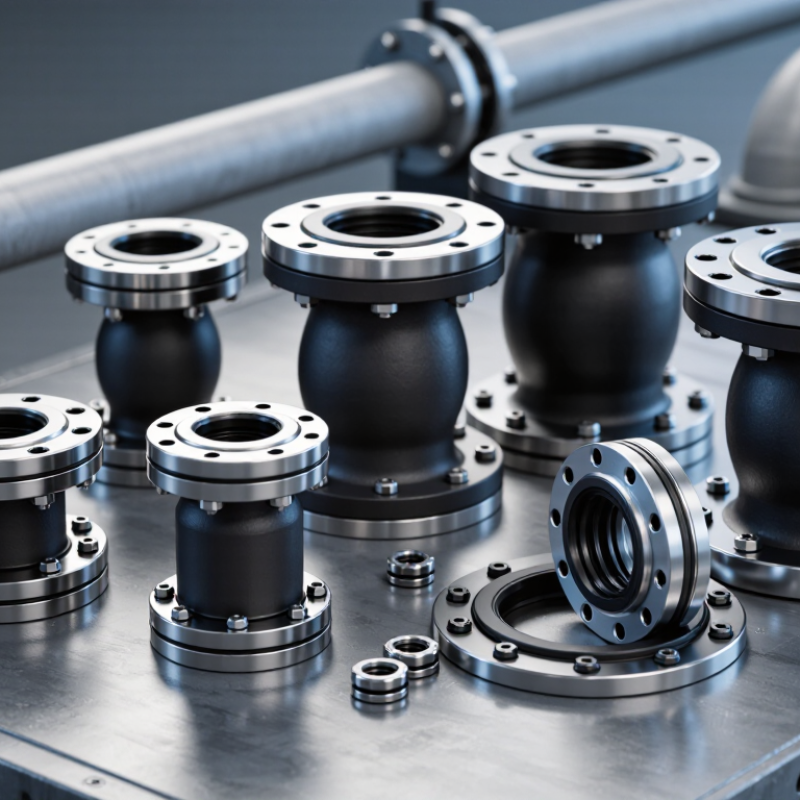
Dismantling joints are mechanical connectors installed between pipes, valves, pumps, and other flanged equipment. They allow controlled assembly, removal, and alignment during maintenance. Unlike a fixed flange connection, a dismantling joint usually includes a telescopic body, flanges, tie rods, and sealing components.
Their value becomes obvious in a crowded pump station. A technician can loosen the tie rods, retract the joint, and remove a heavy valve without cutting the pipeline. This saves labor and reduces downtime.
Fit matters. Small gaps matter. Poor alignment can transfer stress to the valve or damage the gasket.
In water treatment plants, dismantling joints support pump replacement and flow-control equipment. They also appear in irrigation networks, fire-water systems, industrial cooling lines, and wastewater facilities. Selection should consider pressure rating, pipe diameter, temperature, fluid chemistry, and flange standard. Ductile iron suits many municipal applications, while coated steel or stainless steel may perform better in corrosive environments.
Reliable suppliers should provide dimensional drawings, pressure data, material certificates, and clear installation instructions. Field checks remain essential, because drawings may not show buried pipe movement or uneven supports. A joint that fits perfectly on paper may still need adjustment onsite. That is not a design failure, but it deserves review. Proper bolt tightening, gasket placement, and restrained movement directly affect service life. Suppliers serving global buyers should also explain inspection procedures and compatibility limits before shipment.
Top 10 Dismantling Joint Suppliers for Global Buyers
Global buyers should assess dismantling joint suppliers through evidence, not attractive catalogues. The WHO and UNICEF Joint Monitoring Programme reported that 2.2 billion people lacked safely managed drinking water in 2022. This pressure makes reliable pipeline maintenance essential. Suppliers should show tested designs, traceable materials, and documented pressure performance for each joint size.
Check compliance with relevant standards, such as EN 545, ISO 2531, or AWWA C219, where applicable. Ask for test reports, coating specifications, bolt grades, gasket details, and tolerance data. A serious supplier can explain how the joint handles axial movement, flange alignment, and repeated maintenance. Field experience matters. Request installation records from comparable pipe diameters and operating pressures.
Supply capability also deserves close review. UN-Water’s 2024 World Water Development Report highlights growing competition for freshwater resources, increasing the cost of infrastructure failure. Evaluate production capacity, inspection procedures, spare-part availability, and realistic lead times. Factory audits can reveal basic issues, such as poor storage of rubber seals or mixed bolt batches. Small details matter.
Do not trust every document blindly. Test reports may be outdated, incomplete, or prepared for another configuration. Ask who performed the test and when. A weakness remains: many buyers compare unit prices before lifecycle risk. That approach can fail. A cheaper joint may require more shutdowns, labor, and replacement stock. Reliable evaluation combines technical proof, delivery discipline, and honest supplier communication.
For international buyers comparing the top ten dismantling joint suppliers, product quality is only one consideration. A reliable supplier should understand pipeline pressure, working temperature, flange standards, and installation space. Ask for dimensional drawings before ordering. Check the joint’s adjustment range, sealing material, bolt grade, and protective coating. These details matter when pipelines cross borders and face different operating conditions.
Experienced buyers should also review manufacturing records, inspection procedures, and test reports. Useful documents include material certificates, pressure-test results, tolerance data, and packing photographs. Confirm whether the supplier can support international shipping, replacement parts, and clear technical communication. A polished catalog is not proof of dependable performance. I have found that small drawing errors can create expensive installation delays. No checklist is perfect.
Tips: Request one complete sample file before signing a contract. Compare the drawing with your existing flange dimensions. Confirm the required standard in writing. Ask how the supplier handles nonconforming parts and shipment damage. Also, review payment terms, lead time, wooden-case protection, and export documents. An independent inspection may add cost, but it can reveal coating damage, uneven drilling, or missing hardware before dispatch.
Comparing suppliers requires more than checking unit prices. Product quality starts with body material, flange accuracy, sealing performance, and coating thickness. ISO’s 2023 Survey recorded more than 1.26 million ISO 9001 certificates worldwide, yet certification alone does not prove joint reliability. Buyers should request heat numbers, dimensional reports, hydrostatic test results, and coating records for each batch. Small details matter. A poorly aligned flange can delay installation and increase leakage risk.
Standards must match the project location and service conditions. Compare compliance with EN 14525, EN 545, AWWA C219, ASME pressure practices, or relevant national specifications. Pricing should be normalized by nominal diameter, pressure class, material grade, bolt package, coating, testing, and freight. The World Bank’s Commodity Markets Outlook reported a 9% decline in base-metal prices during 2023, but supplier quotes may not fall equally. Currency, energy, and transport costs still distort comparisons. A low quote can be misleading.
Support often separates dependable suppliers from merely acceptable ones. McKinsey’s 2022 Global Supply Chain Leader Survey found that 92% of companies invested in supply-chain digitization, making traceable documents and shipment updates increasingly important. Ask about engineering drawings, sample approval, response time, spare seals, and after-sales claims. Some suppliers promise fast delivery but provide vague production dates. That is a warning. My own review would also score communication quality, although this measure remains subjective and needs consistent records.
Experienced suppliers provide material certificates, coating details, hydrostatic test records, and clear tolerances. Check whether their joints support the required axial movement and allow practical valve removal.
Factory experience matters, especially for large-diameter water, industrial, and infrastructure projects. Request recent project references from similar operating conditions. A polished catalog is useful, but it proves little by itself.
Tips:
Build a comparison sheet with delivery time, testing documents, warranty terms, spare parts, and technical support. Confirm packaging quality for long-distance shipping. Ask how the supplier handles nonconforming dimensions. Many teams overlook this question. I have seen buyers focus on unit cost and later pay more for site modifications. A lower quotation may hide thinner coatings, unclear testing, or limited after-sales assistance. Review the supplier’s communication speed, too. Slow technical replies can become expensive during commissioning.
Thank you for reaching out.
Your message has been received, and a member of the Bluestem Energy Solutions team will be in touch soon. We appreciate your interest and look forward to connecting.
