
2026 Top TL130 Bottom Roller for Global Buyers?
Choosing the right Tl130 Bottom Roller in 2026 requires more than comparing prices or polished product photos. Global buyers need stable dimensions, durable materials, correct mounting points, and dependable after-sales support. A roller may look identical to another part, yet a small difference in shaft length can create installation delays.
Details matter.
This guide examines practical buying factors for TL130 undercarriage applications, including load conditions, track compatibility, sealing performance, surface treatment, and supplier communication. Experienced maintenance teams usually check the part number, machine serial information, drawings, and worn-part measurements before ordering. They also ask for clear photos, inspection records, and packaging details. These steps reduce uncertainty across international shipments.
However, no universal specification should be assumed. Production variations, machine age, and regional configurations can affect fit. Some suppliers describe parts as “compatible” without explaining testing standards or service limits. That wording deserves careful review. Buyers should confirm dimensions, warranty terms, delivery responsibilities, and documentation before payment. Independent inspection may also be worthwhile for larger orders.
The goal is practical confidence, not exaggerated certainty. A reliable Tl130 Bottom Roller should support smooth track movement, resist contamination, and maintain performance under demanding ground conditions. Still, even a well-made component can fail when installed with incorrect tension or damaged track hardware. This guide therefore combines technical checks with realistic purchasing judgment, helping global buyers compare suppliers more responsibly in 2026.
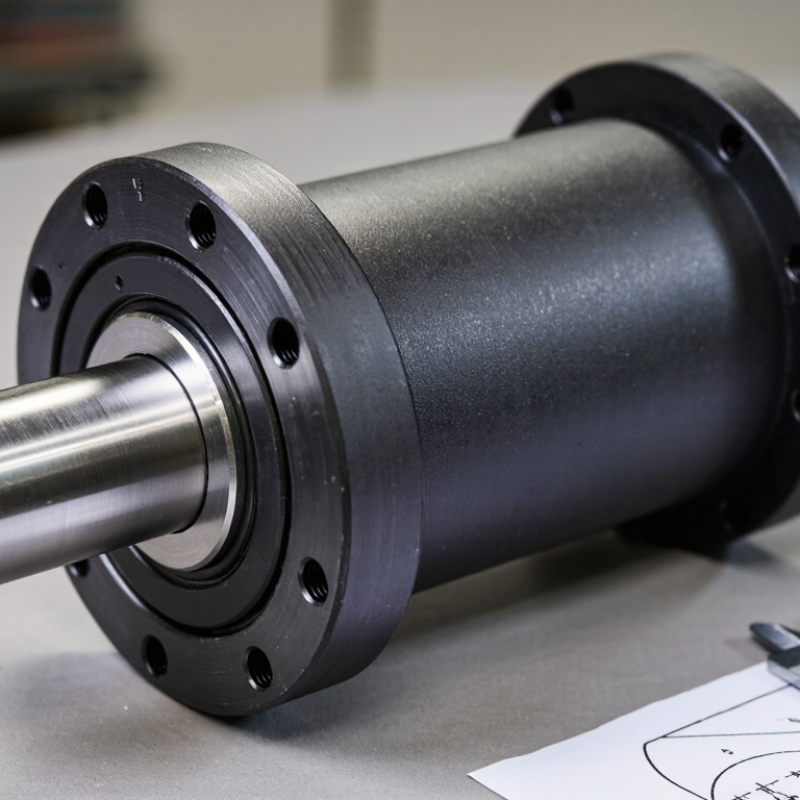
TL130 Bottom Roller: Definition, Purpose, and Operating Role
TL130 Bottom Roller: Definition, Purpose, and Operating Role
A TL130 bottom roller is an undercarriage component supporting the machine’s track chain. It carries operating weight and guides the track along the lower frame. Its steel shell rotates around a sealed shaft. This reduces sliding friction during travel, grading, and loading work. The roller also helps maintain track alignment on uneven ground. A damaged roller may create vibration, heat, or irregular track wear. Small defects become expensive quickly.
The 2024 Yellow Table report recorded global construction equipment sales of about 239 billion US dollars in 2023, despite an annual decline. This market pressure makes undercarriage maintenance more important for fleet owners. In practical inspections, technicians should check oil leakage, chipped flanges, rough rotation, and abnormal roller spacing. Mud packed around the seal deserves attention. So does a loose track.
A clean roller is not always a healthy roller. Field experience shows that internal bearing damage can remain invisible until noise increases. Replacement decisions should follow measured wear, service records, and the machine’s operating conditions. Manufacturer service data remains essential because TL130 dimensions and mounting details can vary. The wrong roller may fit physically but fail under load. That is a costly assumption.
2026 Top TL130 Bottom Roller for Global Buyers? - TL130 Bottom Roller: Definition, Purpose, and Operating Role
Technical Data and Purchasing Reference for TL130-Class Crawler Dozer Bottom Rollers
| Data Category | Specification | Typical Data | Operating or Purchasing Relevance |
|---|---|---|---|
| Product Definition | Component type | Track bottom roller, also called a lower track roller | A load-bearing undercarriage component installed beneath the track frame of a crawler dozer. |
| Product Definition | Application class | TL130-class crawler dozer | Confirm the exact machine model, production series, serial number, and undercarriage configuration before ordering. |
| Operating Role | Primary function | Supports the machine weight and guides the track chain | The roller transfers machine loads to the track chain while helping maintain stable track movement. |
| Operating Role | Load direction | Predominantly radial compression with impact loading | The component must withstand static machine weight, ground reaction forces, shock loads, and uneven terrain. |
| Construction | Main body | Machined steel roller shell | The shell provides the rolling surface and must maintain a precise profile for correct track contact. |
| Construction | Shaft material | Hardened alloy steel | A hardened shaft improves resistance to bending, surface wear, and repeated impact stress. |
| Construction | Rolling elements | Heat-treated steel bushing and bearing surfaces | The internal running surfaces are designed to reduce friction and distribute the operating load. |
| Sealing System | Lubrication arrangement | Oil-lubricated sealed assembly | Oil lubrication is commonly used to reduce internal wear and support longer service intervals. |
| Sealing System | Seal function | Retains lubricant and excludes dirt and water | Seal condition is critical in abrasive, muddy, wet, or highly contaminated working environments. |
| Dimensional Control | Roller diameter | Must match the approved TL130 undercarriage specification | Diameter affects track height, load distribution, chain engagement, and clearance within the track frame. |
| Dimensional Control | Track-frame mounting width | Must match the original roller mounting arrangement | Incorrect width can cause side loading, mounting difficulty, uneven wear, or interference with the track frame. |
| Dimensional Control | Shaft and bolt-hole alignment | Exact fit required | Verify shaft position, mounting-hole spacing, bolt size, and roller offset using technical drawings or measurements. |
| Performance | Operating environment | Construction sites, earthmoving areas, quarry work, and forestry terrain | The correct specification depends on soil abrasiveness, impact severity, moisture, temperature, and daily operating hours. |
| Performance | Wear resistance requirement | High resistance to abrasive contact and impact wear | A durable wear surface helps maintain correct track guidance and delays replacement of the complete roller assembly. |
| Performance | Temperature consideration | Lubricant and seal materials must suit the working climate | Cold-region and high-temperature applications may require different lubricant and seal specifications. |
| Inspection | External condition | Check for cracks, scoring, oil leakage, and abnormal wear | Visible damage or lubricant leakage can indicate seal failure, internal wear, misalignment, or overload. |
| Inspection | Running condition | Monitor noise, heat, vibration, and roller rotation | A roller that binds, overheats, or produces unusual noise should be inspected promptly to prevent track damage. |
| Maintenance | Track tension | Maintain according to the machine service specification | Over-tight tracks increase roller, idler, sprocket, and chain wear; loose tracks can increase derailment risk. |
| Maintenance | Cleaning practice | Remove compacted soil, stones, and debris from the undercarriage | Regular cleaning reduces abrasive buildup and makes leakage, cracking, and uneven wear easier to identify. |
| Replacement | Recommended replacement condition | Excessive wear, leakage, seizure, cracking, or unacceptable dimensional loss | Replacement timing should be based on inspection measurements and the service limits specified for the machine. |
| Replacement | Related components to inspect | Track chain, track shoes, idler, sprocket, carrier roller, and track-frame mounts | Replacing only one worn component may not solve the problem if other undercarriage parts are already damaged or misaligned. |
| Buyer Verification | Required identification information | Machine model, serial number, roller position, measurements, and photographs | Providing complete identification data reduces the risk of receiving an incorrectly sized or incorrectly configured roller. |
| Buyer Verification | Quality documents | Material information, dimensional inspection report, seal test record, and shipment inspection images | Documentation helps global buyers evaluate consistency, traceability, and conformity before installation. |
| Installation | Installation requirements | Clean mounting surfaces, correct fastener torque, and proper track adjustment | Installation should follow the machine service manual and applicable workplace safety procedures. |
| Service Life | Expected durability | Varies according to ground conditions, load, maintenance, alignment, and operating practice | No single service-life figure applies to every jobsite; operating conditions are the main factor in component life. |
| Global Purchasing | Packaging requirements | Corrosion protection, sealed wrapping, impact-resistant packing, and clear part identification | Suitable packaging protects precision surfaces and seals during international storage and transportation. |
| Global Purchasing | Pre-shipment checks | Dimensions, rotation, sealing condition, mounting configuration, and quantity verification | A documented final inspection can reduce installation delays and cross-border return costs. |