
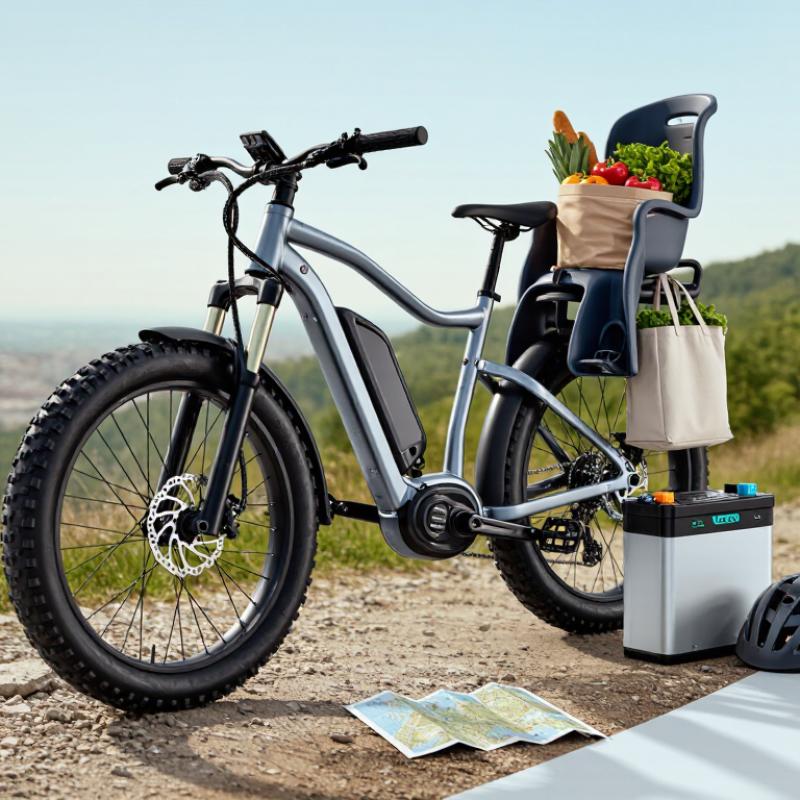
An SUV E-Bike is built for more than a smooth ride to the corner shop. The name is an informal market label, not a universally fixed technical category. It usually describes a sturdy electric bike with wide tires, a reinforced frame, practical carrying capacity, and components suited to mixed terrain. Think of a loaded grocery run, a gravel path, or a child’s seat mounted behind the saddle. The details matter.
Demand helps explain the appeal. PeopleForBikes, drawing on Circana retail data, reported that U.S. e-bike sales grew 269% between 2019 and 2022. That figure covers e-bikes broadly, not SUV-style models alone. It signals a fast-expanding market, but does not prove every buyer needs a heavier, more powerful bike. Ed Benjamin, chairman of the Light Electric Vehicle Association, has described the bicycle as “the most efficient form of transportation ever invented.” His observation captures the promise, though efficiency depends on how and where a bike is used. A heavy frame and large battery can add comfort and range, yet also add weight, cost, and charging needs. Not a perfect fit.
This guide explains what typically separates an SUV E-Bike from a standard commuter model, which features deserve attention, and where marketing claims need a closer look. You will find practical comparisons, not a promise that one bike suits every rider. Check the payload rating, braking system, tire dimensions, and battery details before deciding. The small print can matter as much as the motor.
What Is an SUV E Bike?
What Defines an SUV E-Bike?
An SUV e-bike is a utility-focused electric bicycle built to handle mixed daily use. The label has no single, widely adopted technical definition. It usually signals a sturdier frame, wider tires, stronger brakes, and fittings for racks, lights, and mudguards. Some models add front suspension or a larger battery, but neither feature alone makes a bike an SUV e-bike. Check the parts, not just the label.
The practical difference shows up on a weekday ride: a loaded rear rack, a rough cycle path, then a steep hill. Wide tires can add grip and comfort, while a stable frame helps manage cargo; extra weight can make stairs or tight turns harder. That trade-off is real. CONEBI’s 2023 European Bicycle Industry and Market Profile estimated 5.1 million e-bikes were sold in Europe in 2022, showing the category’s broad appeal, but it did not define “SUV e-bike.” Treat that figure as market context, not proof of a formal class. When comparing bikes, inspect permitted payload, tire width, braking components, battery capacity, and how the bike feels under load. A test ride with a full rack may reveal more than a specification sheet.
An SUV e-bike is generally built for mixed everyday use, with a sturdy frame, wide tires, and practical carrying options. The term is not a fixed technical standard, so designs can differ. Look closely at the actual components, not just the label. Wider tires can feel steadier on gravel or uneven paths, while adding rolling resistance on smooth pavement. A suspension fork may soften bumps, but it also adds weight and maintenance.
Tips: Check tire width and tread against your usual routes. Test the brakes with a loaded rack, if possible. A bike that feels nimble when empty may handle differently with bags.
Key components shape how the bike rides. The motor provides assistance, while the battery determines how much stored energy is available; actual range varies with terrain, rider weight, temperature, and assist level. Hydraulic or mechanical disc brakes help control speed, especially when carrying cargo. Fenders keep spray off your clothes, and integrated lights improve visibility. A rear rack or sturdy mounting points make groceries easier to carry. Small details matter. Still, extra capacity and rugged parts can make a bike heavier than expected, and that trade-off is easy to underestimate.
What Is an SUV E Bike?
How SUV E-Bikes Perform on Different Terrain
An SUV e-bike is built for mixed everyday riding, often combining wider tires, a sturdy frame, and space for practical accessories. Its performance depends on the tire tread, motor assistance, rider weight, and load—not the label alone. On paved roads, the wider tires can feel stable, though they may roll less efficiently than narrow road tires. Keep tire pressure within the maker’s recommended range.
On packed gravel, the extra grip and upright riding position can help the bike feel controlled. Loose stones still require steady steering and sensible speed. Short climbs are manageable when riders shift early and use assistance smoothly. Heavy loads can change how quickly the bike stops. Leave more room for braking.
Soft sand and deep mud are tougher. Wide tires may help, but they do not make every surface easy to cross. Reduce speed, avoid sharp turns, and walk the bike if traction disappears. That can feel inconvenient. It is often the safer choice.
For mixed routes, check the actual surface, weather, and total cargo before setting out. A brief test ride over gravel and a modest incline can reveal more than a feature list. One limitation is easy to overlook: a capable bike may still feel bulky when lifted or parked. That matters on stairs and crowded paths.
| Terrain | Typical Suitability | Traction and Handling | Ride Comfort | Main Limitations | Practical Riding Tip |
|---|---|---|---|---|---|
| Paved roads and bike paths | Excellent | Wide tires provide a stable feel; tire pressure and tread design affect rolling efficiency. | Usually comfortable, especially on models with a suspension fork and a sprung seatpost. | Wide, knobby tires can create more rolling resistance and road noise than narrow road tires. | Use the manufacturer’s recommended tire-pressure range; avoid running very low pressure on smooth pavement. |
| Hard-packed dirt and gravel | Good to excellent | Wide tires can help maintain contact on loose surfaces. Predictable cornering still depends on tread, pressure, and rider speed. | Large tires and front suspension can reduce vibration from small bumps. | Loose gravel can reduce braking grip and make turns less predictable. | Slow down before corners and brake progressively, particularly on downhill sections. |
| Rough trails and forest tracks | Moderate to good | Stable at moderate speeds on non-technical trails; traction varies with tire tread and surface conditions. | Suspension helps with smaller impacts, but many utility-style models have limited travel compared with dedicated mountain bikes. | Roots, rocks, steep descents, and repeated impacts may exceed the bike’s intended use. | Check the model’s suspension, tire, and load specifications before riding technical trails. |
| Wet roads and damp gravel | Moderate | Grip can decrease on wet leaves, painted lines, metal surfaces, and smooth mud. Fat tires do not eliminate slipping risk. | Generally stable at reduced speeds, though braking distances can increase. | Water can affect visibility and braking; prolonged exposure may also damage components not rated for immersion. | Brake earlier, keep the bike upright over slippery surfaces, and follow the manufacturer’s cleaning and water-resistance guidance. |
| Soft sand | Limited to moderate | Wide tires may float better than narrow tires, but deep or loose sand can still cause the front wheel to wander or sink. | Comfort depends on tire volume and pressure; pedaling effort can rise sharply in soft sand. | Sand increases rolling resistance and can strain the rider and drivetrain; some beaches restrict cycling. | Choose firm, permitted routes and avoid abrupt steering or high-speed turns. |
| Mud and deep ruts | Limited | Grip depends strongly on tread pattern and mud depth; packed mud can clog tires and reduce traction. | Suspension may soften bumps but cannot compensate for poor grip or deep ruts. | Slippery surfaces increase the chance of sliding, and mud can accelerate wear on moving parts. | Avoid deep mud when possible; clean and inspect the drivetrain after muddy rides. |
| Snow and ice | Limited; conditions-dependent | Wide tires may help on shallow, firm snow. Ice remains hazardous without suitable studded tires and careful technique. | Cold temperatures can reduce battery performance and may make controls harder to operate. | Traction is highly variable; deep snow, icy slopes, and hidden obstacles can make riding unsafe. | Use appropriate tires, reduce speed, and store and charge the battery within its specified temperature range. |
Note: “SUV e-bike” is a broad marketing term rather than a standardized technical category. Capability varies by bike design, tire type and pressure, suspension, load, motor system, and rider skill. This table describes general tendencies, not a guarantee that every model is suitable for every surface.
What Is an SUV E Bike?
How SUV E-Bikes Differ from Other E-Bike Types
An SUV e-bike blends features associated with commuter, touring, and light off-road bikes. The term is not a precise technical category, so designs vary. Many have wide tires, a sturdy frame, upright handlebars, and mounting points for racks or bags. Some include front suspension, but that does not make them suitable for every trail.
Compared with a typical commuter e-bike, an SUV model may feel more stable on gravel or uneven pavement. Its tires can cushion small bumps, while a rack helps carry groceries or a change of clothes. A cargo e-bike is usually built around heavier loads and may have a longer frame or larger carrying platform. An SUV model tends to balance carrying space with easier everyday handling.
It is a compromise. Wide tires and added equipment can make the bike heavier and less nimble than a streamlined city model. Mountain e-bikes are generally designed for more demanding trails, with components suited to rougher riding. An SUV e-bike may manage a packed dirt path, but loose rocks and steep descents can expose its limits. Check its weight, brakes, tire clearance, and permitted load before choosing. A short test ride matters; a bike that feels steady empty may handle differently with bags attached.
An SUV e-bike is generally a sturdy, versatile electric bicycle designed for mixed everyday use. The term is not a strict technical category, so features vary. Many models combine wide tires, a comfortable riding position, integrated lights, and mounts for racks or bags.
Riders often use them for commuting, grocery runs, and paved paths that turn into gravel or hard-packed dirt. A rear rack can carry a small shopping bag, while wider tires may feel more composed on uneven surfaces. Still, wide tires do not make every bike suitable for deep sand, rocky trails, or heavy loads. Check the bike’s rated payload and intended terrain.
Fit matters. A heavy frame can be awkward to lift onto stairs or store in a small hallway, and a larger battery adds weight. Range also changes with hills, cold weather, rider weight, tire pressure, and assist level. I would not rely on a display’s maximum range for a daily trip; leave a buffer. Test the brakes, saddle height, and handling with the kind of load you actually expect to carry. Small details matter. A bike that feels stable on a quiet test ride may handle differently with groceries over the rear wheel.
“SUV e-bike” is a casual description, not a formal U.S. e-bike class. These versatile bikes are often used for commuting, errands, recreation, and some light off-road riding. Check the bike’s fit, payload limit, expected range, and local rules before choosing one.
Typical U.S. class definitions: Class 1 pedal assist up to 20 mph; Class 2 throttle or pedal assist up to 20 mph; Class 3 pedal assist up to 28 mph. Definitions and access rules can vary by state, locality, and trail.
Thank you for reaching out.
Your message has been received, and a member of the Bluestem Energy Solutions team will be in touch soon. We appreciate your interest and look forward to connecting.
