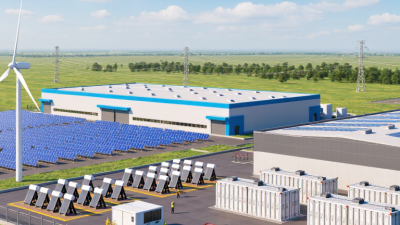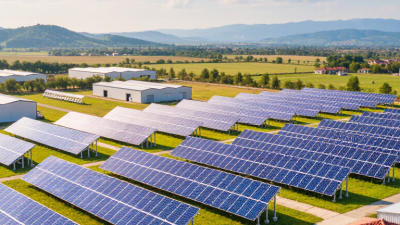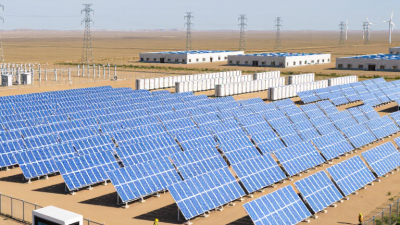
A solar energy project is shaped by more than panels on a sunny roof or open field. It depends on design choices, reliable equipment, skilled installation, and careful commissioning. A supplier’s experience can influence how well these pieces work together over time. Details matter. So do local conditions, from dusty sites to seasonal storms.
This guide explores 10 notable solar energy project suppliers worldwide. It considers their capabilities across areas such as engineering, procurement, construction, equipment supply, and project support. The aim is not to declare one universal winner. A utility-scale developer may need a different partner from a factory, commercial building, or community project. Project size, grid access, service coverage, and financing needs all affect the fit.
Look beyond polished presentations. Ask for comparable project references, clear equipment specifications, realistic timelines, and documented warranty terms. Check who handles commissioning and how faults are addressed after handover. These questions can reveal more than a broad claim about global reach. Still, no shortlist can replace independent due diligence. Supplier information changes, and published performance figures may not tell the whole story. Use this overview as a starting point, then verify details against your site, budget, and technical requirements. The right choice is practical, not merely impressive on paper.
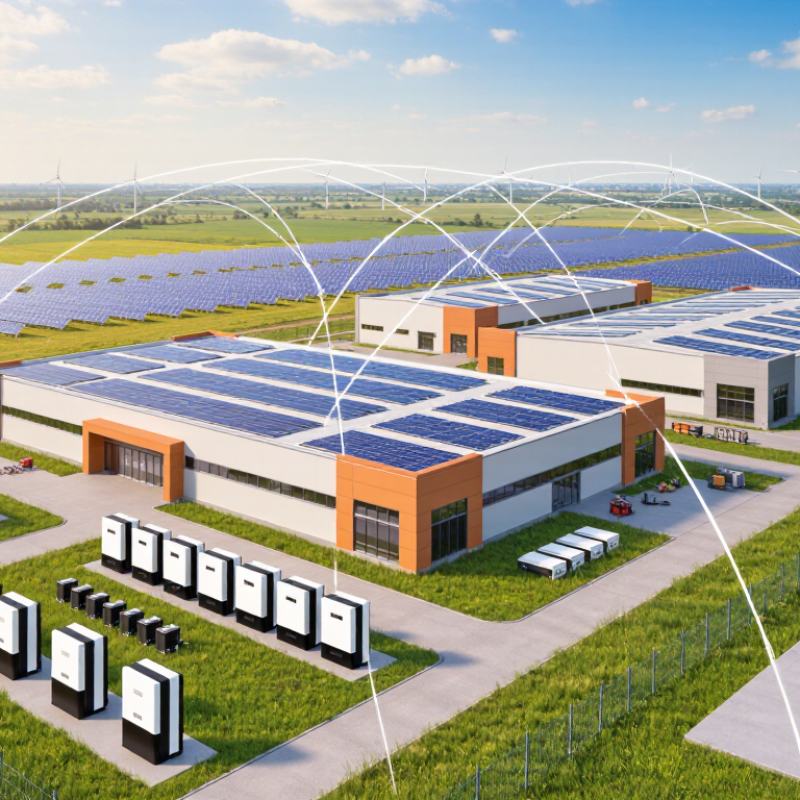
A solar project supplier can provide one component, a specialist service, or an integrated package. The term spans the photovoltaic value chain, not just panel manufacturing. A project may rely on module and inverter suppliers, mounting-system fabricators, cable distributors, engineering consultants, and construction contractors. Some also provide battery storage or grid-connection equipment. The boundaries can blur.
Look beyond a product catalogue. A useful supplier can explain how equipment performs under local heat, dust, wind, and site conditions. Ask for technical datasheets, test records, warranty terms, and clear delivery schedules. For example, a mounting system must suit the roof or ground structure, while an inverter must match the array’s electrical design. Small mismatches matter. They can delay commissioning or complicate maintenance.
Suppliers may also handle transport, installation, monitoring, and long-term operations. Yet one company rarely controls every project risk. Compare who is responsible for design changes, damaged deliveries, spare parts, and service response times. Check references from projects with similar scale and conditions, where possible. A polished proposal is not field evidence. And plans change. Even experienced teams can underestimate access constraints or seasonal weather, so a realistic discussion of limitations is a useful sign of competence.
Global solar capacity reached 1,419 GW in 2023, according to IRENA’s Renewable Capacity Statistics 2024. That figure describes installed capacity, not electricity delivered at every hour. The distinction matters. A gigawatt of panels on paper cannot show how a project handles dust, heat, grid delays, or storage requirements.
IEA PVPS’s Snapshot of Global PV Markets 2024 estimated 2023 additions at 407–446 GW, with cumulative capacity near 1.6 TW. The range reflects differences in reporting and measurement; these figures are not directly interchangeable. Buyers should check definitions before comparing suppliers. Rapid growth also makes procurement about more than panel prices. Engineering quality, grid studies, warranty terms, and spare-parts access can shape a project’s long-term performance.
Ask suppliers for independently reviewed yield estimates, degradation assumptions, and realistic delivery schedules. Request monthly production estimates for cloudy seasons, not only annual averages. On site, nearby spare inverters can reduce downtime after a failure. Forecasts still miss. Even experienced teams can underestimate local weather or connection delays, so I would question any proposal that presents a single precise output figure without explaining its assumptions.
Choosing a solar project supplier requires more than comparing module prices. Bankability begins with audited accounts, insurance capacity, warranty terms, and a credible record of completed projects. Ask for operating-site references, not only polished pipeline charts. Lenders may also examine equipment traceability, independent energy-yield assessments, and realistic replacement timelines. That matters. Technology should fit the site. For a hot, dusty location, review temperature coefficients, soiling assumptions, cleaning access, and degradation data. On a constrained roof, inverter layout and safe maintenance routes can matter as much as headline efficiency. These details affect both output and operating costs.
EPC scale is not simply a headcount. Check whether the supplier can coordinate civil works, grid studies, procurement, installation, and commissioning at your project’s actual size. Request clear project roles, quality checks, and a schedule with weather and interconnection buffers. Service plans deserve equal scrutiny. Clarify response times, spare-parts locations, monitoring coverage, and responsibility for performance reporting after handover. A low bid may exclude travel, software access, or replacement labor. Read the exclusions carefully. No supplier is perfect; reference calls may reveal slow support or overly optimistic production estimates. Compare evidence in a common scorecard, but leave room for site-specific judgment.
Solar project suppliers worldwide range from equipment manufacturers to engineering, procurement, and construction teams. Their capabilities may include module and inverter supply, site design, grid studies, installation, commissioning, and long-term maintenance. Some focus on utility-scale plants, where land surveys, transmission access, and delivery schedules shape project decisions. Others support commercial rooftops, where structural limits and uneven roof conditions matter more. Scale is not everything. A supplier with regional warehouses and trained technicians may resolve a damaged-inverter issue faster than a larger firm operating from far away.
Market reach should be judged by more than the number of countries listed in a brochure. Ask whether a supplier has completed comparable projects in the target climate, can provide spare parts locally, and understands local grid connection requirements. Request references, delivery timelines, warranty terms, and examples of measured system performance. Check who handles commissioning and service after handover. These details reveal practical capacity. Still, project records are not guarantees; weather, permitting delays, and changing freight costs can disrupt plans. Even experienced teams can underestimate a site’s drainage or dust conditions. Compare suppliers on documented delivery ability, technical support, and fit with the project—not on reach alone.
A solar project supplier should fit the site, not just the headline capacity. A warehouse roof with limited space needs efficient modules and careful structural checks. A large, open site may prioritize phased delivery, access roads, and straightforward maintenance. Ask suppliers for projects with similar conditions, including comparable weather and terrain. Small details matter. A coastal site, for example, may need equipment selected for salty air, while dusty locations require a realistic cleaning plan. Request documented performance assumptions, warranty terms, and a clear list of what the quotation includes.
Tips: Share your site layout, monthly energy use, and target commissioning date before comparing proposals. Ask how the design handles grid limits, export restrictions, and outages. Request an example single-line diagram and a written explanation of any proposed storage. Ask for evidence. A precise answer is more useful than a confident promise.
Grid requirements can reshape a project. A supplier should explain interconnection studies, protection equipment, metering, and any needed upgrades in plain language. Check whether its engineering team can coordinate with your utility and local installer. Compare delivery schedules against seasonal access and shipping constraints, not only estimated construction time. Weather changes everything. References help, but they may not reflect your site; verify details with the project owner when possible. One weak point remains: early estimates can miss soil, roof, or grid costs, so keep contingency funds and revisit assumptions before signing.
| Supplier category | Typical project size | Best-fit locations | Grid and technical requirements | What to verify when selecting |
|---|---|---|---|---|
| 1. Solar module manufacturers and distributors | Residential systems of roughly 3–20 kW; commercial and utility projects from hundreds of kW to hundreds of MW | Most regions with suitable solar resources; product choice should reflect heat, humidity, wind, snow, and coastal exposure | Modules must meet applicable local electrical and safety standards and be compatible with the selected inverter, mounting system, and system voltage | Certified product documentation, degradation and performance warranties, delivery schedule, traceability, and warranty service in the project market |
| 2. Inverter suppliers | From small residential installations to multi-megawatt commercial and utility-scale plants | Grid-connected and off-grid markets, provided the equipment is approved for the local electrical and grid-code environment | Confirm voltage and frequency range, anti-islanding protection, reactive-power capability, fault-ride-through settings, communications, and required grid certification | Local compliance evidence, monitoring and firmware support, spare-parts availability, service response, and compatibility with batteries or plant controllers if needed |
| 3. Solar mounting and racking suppliers | Rooftop projects from a few kW; ground-mounted projects from hundreds of kW to utility scale | Roof, carport, and ground-mount sites; engineering must account for local wind, snow, seismic, corrosion, and soil conditions | Electrical grid rules usually apply to the complete plant rather than the racking, but layout must support safe wiring, grounding, and equipment access | Site-specific structural calculations, roof-load assessment where relevant, corrosion protection, foundation design, installation method, and applicable building-code documentation |
| 4. Solar tracking-system suppliers | Primarily large ground-mounted plants, commonly tens to hundreds of MW | Open, relatively level sites where additional energy yield can justify added mechanical and maintenance requirements | Tracker controls must coordinate with plant controls and safe-stow procedures; grid compliance is generally demonstrated at inverter and plant level | Wind-stow design, terrain tolerance, geotechnical assumptions, expected availability, drive-system maintenance, and compatibility with the module layout |
| 5. Engineering, procurement, and construction (EPC) contractors | Commercial rooftops and ground-mounted plants from hundreds of kW to hundreds of MW or more | Markets where the contractor has relevant licensing, permitting experience, local labor, and utility-interconnection expertise | Can coordinate interconnection studies, protection schemes, metering, communications, commissioning, and utility witness testing | Comparable completed projects, scope boundaries, schedule assumptions, performance guarantees, change-order terms, safety record, and local subcontractor plan |
| 6. Battery energy storage system (BESS) integrators | From residential batteries measured in kWh to grid-scale systems measured in MWh | Sites needing self-consumption, backup power, peak management, renewable shifting, or grid services, subject to local market rules | Requires compatible inverters or power-conversion systems, protection, controls, metering, fire-safety design, and approval for intended grid services | Usable energy and power ratings, operating limits, degradation assumptions, warranty conditions, thermal management, emergency response plan, and recycling arrangements |
| 7. Transformer, switchgear, and substation suppliers | Commercial and utility projects requiring connection at distribution or transmission voltage | Projects where the utility specifies voltage levels, equipment ratings, protection, metering, and substation design requirements | Equipment ratings and protection settings must match the point of interconnection, fault levels, grounding arrangement, and utility-approved design | Utility acceptance, applicable test standards, lead times, spare-parts support, environmental requirements, and responsibility for installation and commissioning |
| 8. Grid-interconnection and power-system consultants | Useful for any grid-connected project; especially important for larger plants or constrained networks | All grid-connected markets, with local expertise essential because interconnection rules and utility procedures differ by jurisdiction | May perform load-flow, short-circuit, protection-coordination, dynamic, and power-quality studies required by the network operator | Experience with the relevant utility, recognized study tools and methods, clear assumptions, review milestones, and a defined path to address study findings |
| 9. Distributed-energy and off-grid system integrators | Homes, farms, telecom sites, and remote facilities, typically from a few kW to several hundred kW per site | Remote or weak-grid locations, islands, and sites where grid access is unavailable or unreliable | System design may require batteries, backup generation, islanding controls, load management, and a defined transition between grid-connected and islanded modes | Measured load profile, autonomy target, fuel or backup strategy, battery replacement plan, maintainability, and local technician availability |
| 10. Operations and maintenance (O&M) providers | Residential portfolios, commercial arrays, and utility-scale plants | Any operating market where technicians can reach the site and the provider understands local safety and environmental requirements | Monitoring should track plant output, alarms, communications, and grid-related events; any control actions must follow utility and operating agreements | Preventive-maintenance scope, response times, reporting, spare-parts strategy, cleaning assumptions, vegetation management, safety procedures, and performance measurement method |
Thank you for reaching out.
Your message has been received, and a member of the Bluestem Energy Solutions team will be in touch soon. We appreciate your interest and look forward to connecting.