Top 10 Green Solar Power Products for Global Buyers

Green solar power is moving from a niche solution into everyday energy planning. Global buyers now compare rooftop panels, portable generators, solar water heaters, garden lights, batteries, and compact charging kits. Each product promises cleaner electricity, but promises alone are not enough. A panel beside a dusty workshop faces different conditions from one on a snowy warehouse roof.

This guide, “Top 10 Green Solar Power Products for Global Buyers,” examines practical value rather than attractive packaging. It considers conversion efficiency, battery chemistry, weather resistance, repair options, warranty coverage, installation needs, and end-of-life responsibility. Small details matter. A clear cable label can prevent a costly connection error. A replaceable battery can extend a product’s useful life by several years. Buyers should also check local electrical standards and import requirements before ordering. Product claims may sound impressive. Some are difficult to verify.

Jenny Chase, a long-time solar-market analyst at BloombergNEF, has said, “Solar is now the cheapest source of new electricity in most countries.” That observation explains the market’s rapid growth, but price is only one part of a responsible decision. The cheapest device may use weaker components, offer limited support, or perform poorly in cloudy conditions. Real experience often exposes these gaps. We will compare products through a global buyer’s lens, using measurable specifications and everyday use cases. No ranking is perfect. Climate, budget, grid reliability, and maintenance skills can change the result. A thoughtful choice remains better than a fashionable one.
Top 10 Green Solar Power Products for Global Buyers

Solar Power Products: Definition, Scope, and Environmental Benefits

Top 10 Green Solar Power Products for Global Buyers

Solar power products convert sunlight into usable electricity, heat, or stored energy. Their scope includes photovoltaic panels, solar generators, batteries, inverters, water heaters, chargers, lighting systems, pumps, and monitoring devices. A complete system also includes mounting structures, cables, controllers, and end-of-life recovery.

The sector is expanding quickly. IRENA’s Renewable Capacity Statistics 2024 reported 345.5 gigawatts of new solar capacity in 2023. Solar represented most of the year’s global renewable additions. The IEA’s Renewables 2024 report expects solar photovoltaic systems to provide nearly 80% of renewable capacity growth through 2030. These figures explain why buyers are comparing portable units, rooftop systems, agricultural pumps, and commercial storage products.

Environmental benefits depend on real operating conditions. Solar electricity produces no direct combustion emissions during use. The IPCC reports much lower lifecycle emissions for solar power than coal or natural gas, although manufacturing still requires energy, minerals, and water. The label is useful, but imperfect. A product used daily in a sunny location usually delivers greater benefits than one stored in a warehouse. Battery replacement, transport distance, repair access, and recycling also matter. The Global E-waste Monitor 2024 recorded 62 million tonnes of electronic waste in 2022, showing why responsible design and recovery cannot be ignored. Reliable buyers should check tested performance, warranty terms, safety certifications, degradation data, and clear disposal guidance before purchasing.

Top 10 Green Solar Power Products for Global Buyers - Solar Power Products: Definition, Scope, and Environmental Benefits

Solar power products are equipment that converts sunlight into electricity or useful heat, or stores and distributes solar-generated energy. The product scope includes photovoltaic, solar-thermal, energy-storage, lighting, pumping, cooling, and cooking solutions. The specifications below are representative market ranges and may vary by design, climate, installation quality, and local standards.

Typical specifications are indicative rather than product certifications. Operational emissions refer to emissions at the point of use; lifecycle impacts depend on manufacturing, transport, installation, maintenance, and end-of-life management.
No. Solar Power Product Definition and Main Function Typical Specification Primary Applications Environmental Benefits Key Buyer Considerations
1 Photovoltaic Solar Panels Photovoltaic modules convert sunlight directly into direct-current electricity for household, commercial, or utility-scale systems. Approximately 200–550 W per residential or commercial module; typical module efficiency is about 18%–23%. Rooftops, solar farms, rural electrification, commercial buildings, and hybrid power systems. Generates electricity without fuel combustion during operation and can reduce dependence on coal, oil, or gas-based electricity. Check efficiency, temperature coefficient, wind and snow ratings, warranty terms, certification, available roof area, and recycling arrangements.
2 Portable Solar Chargers Compact photovoltaic devices that provide electricity for small electronics, batteries, and communication equipment away from the grid. Usually 5–30 W for foldable or compact units; commonly supplied with USB or USB-C outputs. Travel, camping, emergency communication, outdoor work, and disaster-response operations. Reduces the need for disposable batteries, fuel-powered generators, and grid electricity for low-power devices. Compare measured output in real sunlight, portability, weather resistance, connector compatibility, charging speed, and battery-storage needs.
3 Portable Solar Battery Power Stations Rechargeable battery systems that store solar electricity and supply AC or DC power when sunlight is unavailable. Approximately 300–3,000 Wh battery capacity, with typical solar-input ratings of 100–800 W. Emergency backup, outdoor activities, temporary worksites, mobile offices, and small appliances. Can replace small petrol or diesel generators for many low- and medium-power loads, avoiding local exhaust emissions and fuel spills. Evaluate battery chemistry, usable capacity, inverter output, cycle life, thermal protection, repairability, and battery end-of-life service.
4 Solar Water Heaters Solar-thermal systems use collectors to heat water for domestic, commercial, or institutional use, usually with a storage tank. Common residential systems use 100–300 L storage tanks and approximately 2–6 m² of collector area. Homes, hotels, hospitals, dormitories, laundries, and food-processing facilities. Lowers electricity or gas consumption for water heating, which is a significant household and commercial energy demand. Assess solar resource, freeze protection, water quality, roof loading, backup-heater requirements, storage insulation, and maintenance access.
5 Solar Street and Area Lighting Integrated systems combine a photovoltaic panel, rechargeable battery, LED luminaire, controller, and lighting structure. Typically 20–150 W LED output with approximately 8–12 hours of nightly operation, depending on battery and weather conditions. Roads, parks, pedestrian areas, campuses, villages, parking areas, and off-grid public infrastructure. Avoids trenching and grid electricity in suitable locations while providing efficient LED illumination with no combustion emissions during use. Review lighting distribution, battery autonomy, pole strength, theft protection, humidity resistance, seasonal sunlight, and light-pollution control.
6 Solar Water Pumps Photovoltaic-powered pumps move water for irrigation, livestock, drinking-water supply, drainage, or water storage. Common small and medium systems range from approximately 0.5–5 kW, with output determined by pump head and flow rate. Agriculture, remote communities, livestock facilities, gardens, and groundwater or surface-water distribution. Can replace fuel-powered pumping, reduce operating emissions and fuel logistics, and support efficient water delivery when properly designed. Match daily water demand, total dynamic head, dry-run protection, water quality, seasonal solar availability, storage tank size, and borehole conditions.
7 Solar Cookers and Solar Ovens Reflective or insulated equipment concentrates or traps sunlight to produce heat for cooking without conventional fuel combustion. Typical useful thermal output is approximately 0.5–2 kW under strong direct sunlight; cooking temperatures vary by design. Households, humanitarian programs, outdoor cooking, institutional kitchens, and fuel-constrained communities. Can reduce firewood, charcoal, LPG, and kerosene consumption, helping lower household fuel emissions and pressure on local biomass resources. Consider local cloud patterns, cooking capacity, safety, ease of alignment, thermal storage, cleaning, user training, and backup-cooking requirements.
8 Solar Air Heaters Solar-thermal collectors warm air and circulate it into buildings or enclosed spaces for supplemental heating and ventilation. Often designed for approximately 0.5–2 kW of thermal output per system, depending on collector area and sunlight. Homes, workshops, cabins, warehouses, agricultural buildings, and low-temperature drying applications. Provides renewable heat and may reduce the use of electric resistance heaters, gas, oil, or wood during sunny periods. Check insulation, airflow, fan power, collector orientation, building airtightness, climate, condensation control, and auxiliary heating needs.
9 Solar Attic and Roof Ventilation Fans Small photovoltaic-powered fans exhaust hot or humid air from attics, roof spaces, sheds, or other enclosed areas. Common electrical ratings are approximately 10–50 W, with airflow depending on fan size and installation resistance. Residential attics, garages, agricultural structures, storage areas, and small utility buildings. Uses sunlight directly for ventilation and may reduce heat buildup and the cooling demand of adjacent occupied spaces. Verify airflow rate, roof sealing, rain protection, noise, control strategy, fire safety, and whether balanced intake ventilation is available.
10 Solar Refrigeration Systems Refrigerators or freezers powered by photovoltaic electricity, generally using a high-efficiency DC compressor and battery storage. Small systems commonly use about 50–500 W of electrical input, with daily energy demand depending on size, insulation, and ambient temperature. Medical cold chains, food storage, rural households, fishing communities, laboratories, and off-grid businesses. Reduces reliance on diesel generators and can prevent food or medicine losses where reliable grid electricity is unavailable. Assess temperature stability, required storage volume, battery autonomy, refrigerant type, insulation, service availability, and vaccine or food-safety standards.

Key Criteria for Evaluating Solar Products in Global Markets

Global buyers should judge solar products by performance, safety, and lifetime value, not appearance alone. A useful evaluation begins with the product’s purpose. Solar panels need verified efficiency, temperature tolerance, and resistance to humidity, dust, and strong wind. Inverters require stable voltage control and clear fault protection. Batteries should disclose usable capacity, cycle life, thermal safeguards, and replacement procedures. Small details matter.

Independent testing supports reliable decisions. Look for conformity with recognized international standards and valid reports from competent laboratories. Certification is important, but it does not guarantee excellent field performance. Check the test date, product model, operating conditions, and responsible testing body. A certificate with vague information deserves careful questioning. Country-specific import rules and electrical requirements also need review.

Real operating conditions can expose weaknesses. A panel tested under cool laboratory light may perform differently in a hot, dusty village. Buyers should compare warranty terms, spare-part access, installation guidance, and repair options. Packaging should protect equipment during long sea transport, especially against moisture. Digital monitoring can reveal declining output, but it should protect user data and remain understandable. No checklist is perfect. I would still request sample testing before a large order, because brochures rarely show every limitation. A cheaper product may become expensive when service delays, battery replacement, or poor documentation enter the calculation.

Top 10 Green Solar Power Products for Global Buyers

This benchmark compares representative conversion-efficiency levels across major solar photovoltaic technologies. Values are approximate commercial-range midpoints based on published industry and research references, not brand-specific specifications. Efficiency is only one purchasing criterion; buyers should also assess durability, temperature coefficient, degradation rate, recyclability, certification, warranty, and total lifecycle cost.

Reference basis: published efficiency ranges and technology benchmarks from IEA PVPS, Fraunhofer ISE, and NREL. Emerging tandem technology is shown as a pilot-stage category rather than a mature mass-market average.

Top 10 Green Solar Power Products and Their Main Applications

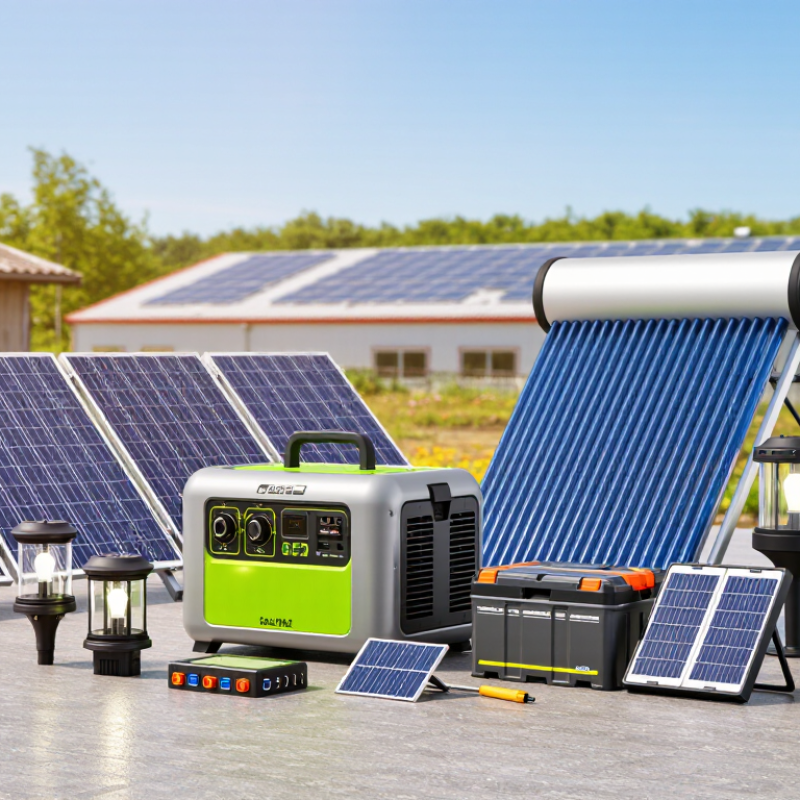
The top 10 green solar power products serve different energy needs, from homes to remote work sites. Solar photovoltaic panels convert sunlight into electricity for rooftops, farms, schools, and factories. Flexible solar panels fit curved surfaces, such as vehicle roofs and temporary shelters. Portable solar generators support camping, emergency lighting, and outdoor medical equipment. Solar batteries store daytime power for evening use. They also reduce dependence on unstable grid supply.

Solar water heaters provide hot water for homes, hotels, and community kitchens. Solar street lights combine panels, batteries, and efficient lamps for roads, parks, and village paths. Solar irrigation pumps move water for farms without diesel fuel. Solar ventilation fans remove heat from greenhouses, warehouses, and livestock buildings. Solar chargers power phones, sensors, and small communication devices in areas with limited electricity. Solar-powered security lights improve visibility around entrances and storage areas.

Installation experience shows that product selection must follow local sunlight, weather, and load requirements. A battery may perform poorly in extreme heat without proper ventilation. Dust can reduce panel output more than many buyers expect. Small systems are not always cheaper over time. Certified technicians should check wiring, mounting strength, grounding, and battery protection. I have also seen users oversize panels while ignoring storage capacity. That mistake creates unused daytime energy. Reliable monitoring can reveal these losses and support better maintenance decisions.

Comparing Performance, Cost, Durability, and Sustainability

Top 10 Green Solar Power Products for Global Buyers

Performance differs sharply across the ten main solar product categories. Panels should be judged by output in heat, shade, and low light, not laboratory efficiency alone. Portable power stations need stable watt-hour capacity, safe charging, and low standby loss. Solar water pumps must maintain pressure when sunlight changes. Small lights and chargers are less powerful, but their daily usefulness can be higher in remote areas.

Cost comparisons should include installation, replacement parts, batteries, and transport. A cheaper panel may lose value if its frame corrodes near the coast. Battery systems usually carry the highest upfront cost, yet longer cycle life can reduce the cost per stored kilowatt-hour. I also check warranty terms carefully. Some coverage excludes heat damage, poor ventilation, or incorrect wiring. That detail is easy to miss.

Durability depends on materials and maintenance. Look for sealed housings, corrosion-resistant fasteners, thermal protection, and practical ingress ratings. Sustainability is broader than low operating emissions. Recyclable packaging, repairable controllers, safer battery chemistry, and responsible material sourcing matter too. One weakness in many product rankings is their reliance on manufacturer data. Real performance can fall during dust, monsoon rain, or winter shading. A careful buyer should record monthly output, inspect cables, and compare expected service life with actual replacement needs. Some products remain useful despite modest efficiency. Others look impressive on paper, but disappoint after frequent charging.

Buying Considerations for Different Regions and Energy Needs

Top 10 Green Solar Power Products for Global Buyers

Buying Considerations for Different Regions and Energy Needs

A practical top ten includes photovoltaic panels, microinverters, hybrid inverters, lithium batteries, solar generators, water heaters, pumps, streetlights, chargers, and monitoring systems. The right choice depends on sunlight, grid stability, temperature, and local installation skills. IRENA’s Renewable Capacity Statistics 2025 reports 585 GW of renewable capacity added worldwide in 2024. Solar power contributed about 452 GW, showing strong demand but also intense supply competition.

In sunny, grid-connected regions, high-efficiency panels and export-ready inverters can reduce daytime electricity costs. Buyers should check voltage, frequency, fire protection, and certification requirements before ordering. In weak-grid areas, hybrid inverters and modular batteries provide more resilience. Hot climates need strong ventilation and temperature-rated equipment. Cold regions may require battery heating and snow-resistant panel frames. Coastal buyers should inspect corrosion ratings. Humid air is unforgiving. For remote farms, solar pumps and efficient storage often matter more than maximum panel output.

In sunny, grid-connected regions, high-efficiency panels and export-ready inverters can reduce daytime electricity costs.

Tips: Compare usable battery capacity, not only advertised capacity. Request independent test reports, warranty conditions, spare-part availability, and installation guidance. The IEA’s Renewables 2024 report expects solar photovoltaics to deliver most global renewable growth through 2030. Still, my shortlist would change after a site survey. Shading, dust, weak roofs, and poor wiring can undermine excellent equipment. Buyers sometimes focus on panel efficiency and overlook maintenance access. That is an expensive mistake.